


Come Home to Yourself: A Centering Practice To Help You Return & Live In Your Body
 You already know this… life is fast-moving, and often, not in the direction you choose. Your days are filled with problem-solving, managing demands, and meeting deadlines. Granted, you accomplish a lot. However, there’s a downside: it keeps you living in your head. And when that happens, you can stay stuck in reactive mode, responding on autopilot, leaving little time to check in with yourself. As a result, and I’ve seen this in my clients so many times, the quiet wisdom in your body is unheard. So this is an invitation to come home to yourself, to find your way back to the subtle signals your body has been offering.
Listening to our body’s wisdom, living in your body, not just your head, learning to come home to yourself, isn’t a skill taught in school or family life. I wish it were! I wish teaching it started early and that it was as common as learning how to tie your shoes.
Most of us stumbled across it when we were looking for an explanation for our feelings of disconnect. We knew something was missing from our lives because we felt like we were on the outside looking in. We just didn’t feel fully present in our own lives.
The truth is: your body and its wisdom have never left you. But your attention has. What makes it so hard, even when we know our body wisdom exists, is that we’ve become enmeshed in a life that demands that we get to it later, or better yet, that we go back to ignoring or silencing our body’s wisdom.
What can we do to make coming home to ourselves a regular part of our lives? It begins with this revelation: your body is not something you “manage”.
Your Body Is More Than a Vehicle
We are taught to compete, compare, and be dissatisfied with our bodies. We may even come to view it as an enemy or something to be used, abused, or neglected. (If your past has driven a wedge between you and your body, somatic therapy is beneficial.)
Most women don’t hear this enough. The way your body, emotions, thoughts, and actions work together is amazing. There is absolutely no need to compare yourself with anyone else. You are more than enough. The world is a better place because you are here.
Come Home to Yourself: Listen When Your Body Speaks
Contrary to what you might think at first, your body is not working against you. It’s trying to keep you safe and well.
- Long before anxiety becomes overwhelming, your breathing changes.
- Long before resentment becomes conflict, your jaw tightens.
- Long before burnout forces you to stop, your energy begins quietly fading.
It’s trying to guide you back to yourself. And we can assist it through a practice of centering.
What Does It Mean to Be Centered?
Centering is the practice of returning to yourself throughout your day. The center refers to a balanced physical, mental, emotional, and spiritual state. Being centered means you’re able to return to your calm center amidst the busyness of everyday life. Your authentic self isn’t overshadowed by stressful circumstances or negative thoughts and emotions.
When you are centered,
you are in a state of clarity, focus, peace, flow, and balance.
When you are not centered,
you are unclear, unfocused, stressed, and off balance.
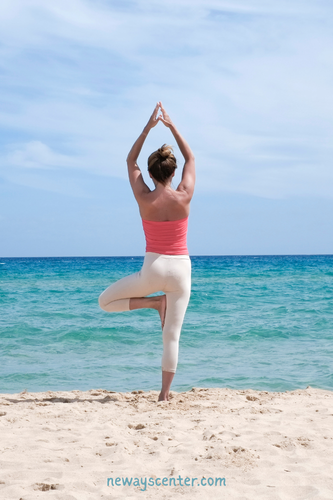 Centering is especially helpful in the midst of strong emotional states like excitement or anxiety. Athletes, public speakers, actors, or anyone who wants to feel stable and prepared before a potentially stressful event use it. When life becomes chaotic and demanding, the ability to maintain a relaxed body and focused state of mind is priceless.
Here are the centering basics that will deepen your awareness of your body-mind connection:
Focus your attention on your sensations and aliveness. Feel what is present in this moment.
Purposefully bring your attention to your center (2 inches below your navel).
Center in Length. Drop into gravity with your lower body and lengthen up the spine. This promotes dignity, self-worth, and your highest vision.
Center in Width. Balance left to right. Widen from your centerline. Fill out and beyond your edges. This promotes connection, community, and interdependence.
Center in Depth. Fill in, feel the space behind you, inside of you, in front of you. Don’t pull back, nor push forward. This connects you to your past, present, and future.
Center in Purpose. Speak your commitment to yourself. Or center into your calling or longing. Say out loud, “I am committed to…”
When this becomes second nature, you are in relationship with your body once again.
“Dream Big, Start Small.” Here's the one thing you can do today.
Even during a busy day, you can use this exercise to come home to your center.
Find a place where you can stand comfortably. Imagine the earth gently supporting you from below while the crown of your head lengthens toward the sky. Notice your breathing without changing it.
Now bring your attention to your physical center (two inches below your navel). Breathe, and allow your body to settle around this center.
Feel the weight of your lower body connecting with the ground. Let your spine lengthen naturally.
Notice the space in front of you, behind you, and on either side of you. You are supported from every direction.
Now quietly ask yourself: "What does my body need from me right now?" Notice what arises.
Perhaps your shoulders soften. Your breath deepens. Or maybe nothing happens. You’re learning to trust that your nervous system is realigning every time you pause and listen.
Would you like some more assistance in reconnecting with the subtle messages your body gives you every day? This somatic awareness is a foundational part of Stepping Forward as your authentic self. My passion is to help women find their inner wisdom so they can live lives of greatness. I invite you to download the Introduction to How to Step Forward to a Future You've Created. You’ll also receive my monthly newsletter, which is full of somatic tools that bring real transformation.
 Journaling Reflection Prompts
How does your body let you know you're becoming overwhelmed before your mind acknowledges it?
What changes when you pause long enough to reconnect with your breath and physical sensations?
How might your decisions, relationships, and work change if you trusted your body's wisdom as much as you trust your intellect?