Maria Connolly, LPC Facebook Facebook Facebook

Tag: Self-Confidence

Self confidence requires making subtle shifts in how you use your body as you create mindfulness and awareness that exponentially increases your ability to influence, listen, be resilient, manage stress, maintain energy and be more effective. Rather than numbing yourself to uncomfortable circumstances and powering through them, you can learn to mindfully choose to respond in a way that leaves you feeling whole and at peace.

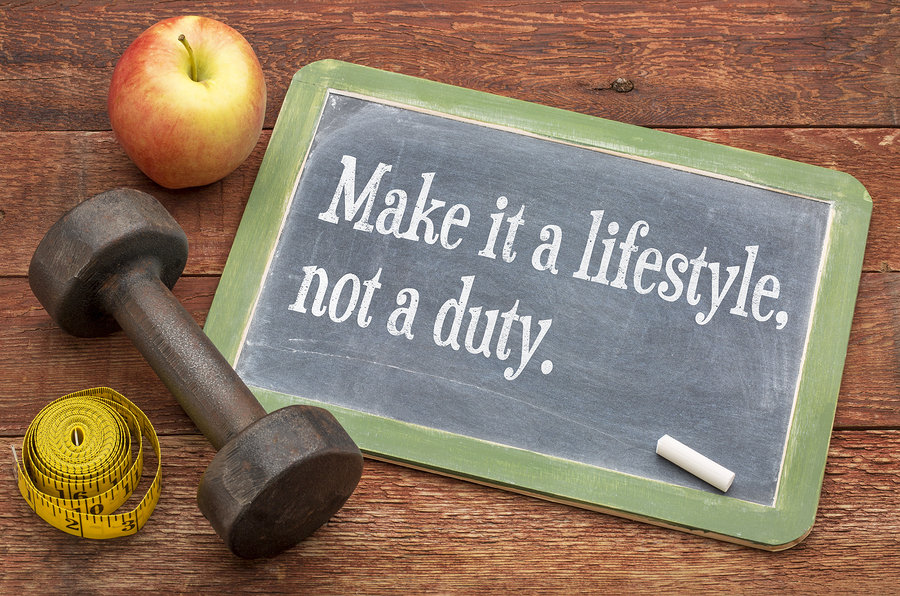
Stuck in a Exercise Rut? Discover How to Use NLP to Ramp Up Your Fitness Motivation

feeling stuck in a rut so use neuro linguistic programming NLP for fitness motivation


“Achieving good fitness involves making yourself a priority.”  ~ Robert Dilts

Do you know anyone who has turned their indoor treadmill into a clothes hanger? It happens more often than not. People in the United States are spending billions of dollars on physical fitness equipment each year, too much of which sits and collects dust. Just the gyms and health & fitness clubs alone this year are estimated to be $30 billion industry!

We all want and are trying to buy what they’re selling…to live longer, have more energy, enjoy better health, maintain greater flexibility, and create lean bodies that look super. So what’s causing this huge gap between the desire to be fit and the reality of everyday life? If spending money isn’t the answer, what is?

There are no magic pills or quick fixes to obtaining your optimal fitness. For many people, fitness depends on overcoming long-held habits and adopting a healthy lifestyle. Complete fitness applies to the combined health of your body, mind and spirit, which are supported by proper nutrition, exercise and a healthy outlook on life. These are the things that fuel your motivation to make real change!

How can you step up your inner game for physical fitness and lasting motivation that gets you through the tough times?

While the outer game focuses on your physical skills, the inner game focuses on your mindset, your mental approach and wellbeing – such as your attitude, self-confidence, your ability to deal with setbacks, and your commitment level.

First do a reality check. If you keep doing what you’re doing …

  • What will you look like when you’re 70?
  • Will you have the flexibility to tie your own shoes?
  • Will you have the stamina to dance at your granddaughter’s wedding?
  • Will you greet each day with joy?


If you don’t like what you see, then NOW is the time to start making changes. You are the master of your own body. No one can live your life for you. Each decision is your alone – to eat healthfully, to exercise regularly, to think positively.

Right now, take a moment, close your eyes, and visualize how you want your life to unfold from this day forward.

Visualization is powerful and can be dramatically enhanced by NLP. What’s NLP and what does it have to do with fitness? It may surprise you to learn that using Neuro-Linguistic Programming (NLP) for fitness motivation is highly effective. It’s a set of guiding principles, attitudes and techniques about real life behavior. NLP allows you to change, adopt or eliminate behaviors as you desire. It also gives you the ability to choose your mental, emotional, and physical states of wellbeing. It’s a powerful tool you can use to create real and lasting change in your mental and physical wellbeing.

You may think you need a physical trainer to get in shape and that might be true. But it is also true that our physical wellbeing is dependent on our mindset. Working with a life coach or psychotherapist can help you achieve excellence in every aspect of your life, including your physical fitness. For example, you can work with a life coach on…

  • Setting achievable goals for where you are right now.
  • Developing self-discipline to make these goals part of your new lifestyle.
  • Making being fit part of your new identity by breaking old habits and setting new ones that create the lifestyle you want to live.
  • Updating your self-image and self-esteem by appreciating the progress you’ve made.

Are you ready to learn how using NLP for fitness motivation can help you achieve the healthy lifestyle you desire? Let me support and challenge you each step of the way as you activate your inner abilities to achieve and maintain your motivation for total wellness and fitness. Contact me and let’s get started as soon as possible!

If you haven’t you received your free copy of The 7-Point Body Wellness Assessment yet, download it right now. It will help you get started on the path to a healthier you.

How to Deal with Fear – Ten Ways to Cultivate a Fearless Mindset

How to Deal with Fear - Ten Ways to Cultivate a Fearless Mindset“Fear defeats more people than any other one thing in the world.” ~ Ralph Waldo Emerson

Have you experienced fear lately? Were you afraid to try something new? To push yourself outside your comfort zone? To say something you feared would start a confrontation? Did you meet it head on or did you retreat and run away? How did your response make you feel? Empowered or powerless?

Dictionaries define fear as: “an unpleasant emotion caused by the belief that someone or something is dangerous, likely to cause pain, or a threat.” Because we shy away from what is unpleasant, I challenge you to redefine the word fear this way: “This feeling of fear is alerting me to an opportunity to become more fully aware of my surroundings and connect with my inner power to handle whatever is happening.”

Just as children first love sweets then, as they mature to adulthood, they develop a taste for the full palate of flavors – bitter coffee and endive, savory chili peppers, salty anchovies, and sour lemon – we can mature and embrace each uncomfortable sensation as an opportunity for growing and enriching our experience in life. To help you reframe your feelings and learn how to deal with fear and worry, here are ten ways to cultivate a fearless mindset:

  1. Fully acknowledge and accept your feeling of fear. Everyone feels fear. By being fully present in your feelings, you can embrace it as a friend that teaches you about yourself.
  1. Change your right/wrong attitude to a can’t-lose attitude. Regardless of the decision you make, there will be positive rewards. You may or may not attain your desired goal. No matter what, you haven’t failed. You’ve learning what you’re capable of and gained a greater self-awareness of your strengths and weakness. Upon reflection you’ll see what you can do to achieve greater skills so you can excel.
  1. See the benefits of facing your fear. Avoiding, running and hiding only reinforces your fears. When you gain confidence and put yourself out there, you’ll make stronger connections with family and friends. You’ll be sharing solutions with co-workers and clients. You’ll be true to yourself. And those who love you will accept you for who you are. Those who have a problem with your authenticity don’t need to be in your life anyway.
  1. Recognize fears that you’ve inherited. Not everyone has supportive parents who instill the belief that you can do and be anything you want to be. Fears around money, sex, and self-worth are some of the issues that stem from your upbringing.
  1. Identify where the fear is coming from. What you say you fear may not necessarily be what you really fear. For example, if you’re afraid of public speaking, in actuality you might really fear rejection, feeling foolish or failing. When you identify the underlying issues, you can focus on resolving them.
  1. Celebrate your growth. Don’t forget each time you’ve been challenged and have pushed your comfort zone further out. Remember it’s not about winning or losing. It’s that you handled it!
  1. Avoid comparisons, which only lead to feelings of inadequacy. Your life experiences are unique to you. Own how YOU feel and don’t worry about what someone else would do in the situation.
  1. Recognize fear as an alert system to protect against valid dangers. Fearless doesn’t mean reckless. Life is fragile and we must exercise proper precautions in times of danger.
  1. Take baby steps if you feel overwhelmed. If you fear swimming, jumping in the deep end of the pool will not help you. Slowly easing into the water and having positive experiences will build your confidence and feelings of control. Often having a mentor to guide you is what’s needed to get you past the roadblocks.
  1. Find your support system. When you can voice your fears out loud to someone you trust, you release the pressure, and the challenge may not be as large as you first felt. They know you well and their helpful feedback and support can instill a renewed confidence in you.


If you want to learn more about how to deal with fear and cultivate a fearless mindset, I recommend you get Susan Jeffers’ book, Feel the Fear and Do It Anyway: Dynamic techniques for turning Fear, Indecision and Anger into Power, Action and Love.

Do you feel it’s time to step towards your fears and learn to embrace them so you can create excellence in your life? I’m here to help. Contact me and let’s talk about what your next, best step might be.


10 Easy Ways to Boost Self-Confidence and Attain Your Dreams

By starting these ten simple steps that boost self-confidence, you can follow your dreams and make them come true, even when others say it can’t be done.“Once we believe in ourselves, we can risk curiosity, wonder, spontaneous delight, or any experience that reveals the human spirit.”E.E. Cummings

Don’t you admire people who confidently face their fears, challenges and tragedies head-on? They have a knack for always seeing the positive, the opportunities and potential in even the most trying circumstances. Their self-confidence supports and fuels them as they follow their dreams and make them come true, even when others say it can’t be done.

Does that describe how you live your life? Even if it doesn’t at the present, there are positive steps you can take to make this your reality. Here are ten easy ways to help you boost self-confidence…

  1. Reality checks. Is it really as scary or impossible as it seems at first? Fears are often not supported by reality. You’re not going to die of embarrassment when speaking in front of a crowd. More than likely, you will create a rapport and connect with another person on a deeper level if you simply acknowledge your mistake, sincerely apologize and move on. And you can often do “impossible” things if you break the huge project down into smaller, doable steps.
  1. Surround yourself with people that are good at what you want to improve. By removing the naysayers from your life and associating with those you want to imitate, you’ll find it easier to accomplish your goals.
  1. Make confidence building a daily practice. One small change a day adds up to a new way of living. I recommend that you begin with centering practices which are foundational for making real changes in your life.
  1. Transform your inner critic into an inner coach. Be aware of your negative self-talk and replace it with positive thoughts. If you begin thinking, “This is too hard, I want to quit”, replace it with “How” questions: “How can I make this a little easier?” “How can I keep my eyes on the prize?”
  1. Keep learning new skills. Never stop learning. Whether you’re learning just enough to get by or are striving to master a new skill, your self-confidence increases as you continue to acquire new skills!
  1. Develop a “Beginner’s Mind” mindset. When you admit you don’t know everything, your mind is open to asking for help, being curious, to asking questions. You won’t compare yourself to others, because you have nothing to prove. This positions you as a learner who is filled with child-like wonder.
  1. Practice psycho-rehearsing. Visualize in great detail, every step, to accomplishing a task. Athletes do this when they imagine over and over again successfully hitting the target or making the hoop. The brain can’t tell the difference between the visualization and actually doing it.
  1. Focus on competence not perfection. Perfection is a digital on or off switch. Either you’re perfect or you’re not. Competence has five stages, so life becomes an exciting journey of discovery as you move through these stages.
  1. Develop a Compassionate Mind. Treat yourself with the same kindness, concern and support you’d show to a good friend. Mindfully acknowledging and experiencing your feelings is a core component of self-compassion. Dr. Kristin Neff provides some guided meditations and exercises that you’ll find helpful. Straightforward self-compassion boosts self-esteem more than focusing on what we’re good at.
  1. Focus on positive experiences. You are what you do. When you change what you do, you change what you are. Always act and speak in a positive way. Pour your heart and energy into kind generous actions. You’ll soon notice an increase in your self-confidence.

It is possible to reach your dreams as you achieve your full potential. Sometimes it simply takes someone holding up the lantern and lighting the way. I would be delighted if we traveled on this journey together. Contact me and let’s talk about which of my life coaching services would get you to where you want to be.

Self-Assessment not Judgment Leads to Greater Self-Confidence

Self-acceptance, self-awareness and self-motivation empower you to let go of self-judgments as you realistically make a self assessment of your situation.Have you ever wondered why some people seem to view life’s challenges confidently and in a positive light, while others struggle with negative reactions? The distinguishing factor is whether a person is assessing themselves and the situation or if they’re judging themselves and the situation. What’s the difference?

Assessing is viewing the situation objectively, seeing what happened, why it happened and learning from it and moving on with greater self-knowledge.

Judging is the limiting mindset of labeling yourself as a winner or a loser based on a standard that either you or someone else imposes on you.

When you have a winner/loser mindset, it creates a desperate need to continually achieve your goals based on the fear of not measuring up to a self-imposed, unrealistic standard. This leads to chronic stress of fear of failure or to the other extreme of becoming narcissistic and egotistical.

Let’s examine ten typical behaviors of people with low self-confidence and see how realistically assessing the situation without judgment can create greater self-confidence:

Underestimate their capabilities. Rather than immediately reacting with “I can’t”, calmly think about the desired outcome and see how your skills can accomplish the task. Remember you don’t have to do things like everyone else does. When you succeed by your unique style, you gain immense satisfaction and confidence.

Take the blame for everything. Rather than thinking, “If only I had done…” let others be responsible for their own actions. This actually dignifies them with freedom of choice. And if you are responsible in some way, make amends as best as you can by saying, “I’m sorry I made a mistake.” In many cases we just have to accept that we can’t fix everything.

Are overly self-critical. Our minds are quick to judge and criticize so rather than holding onto those stories, acknowledge them as judgments and let them go without getting caught up in them.

Take feedback from others as criticism. Rather than disengage from the experience and switch to negative thoughts, become more engaged in what the person is saying and sift out what is helpful to you.

Constantly focus and review past failures. Acknowledge each failure as helpful feedback, allow yourself to feel the emotions. Accept and learn from them as a valuable part of your experience.

Predict future failures. Rather than saying, “It never works or I always fail so why try”, approach each new situation with curiosity and enthusiasm as you eagerly look for the possibilities.

Focus on being perfect instead of being competent. Rather than thinking, “I can’t allow myself to make a mistake”, recognize that everyone makes mistakes. That’s how we learn. Don’t demand the impossible from yourself, and be happy you’re doing your best.

Are people-pleasers. Rather than seeking validation from others, it’s okay to say, “I’d really love to help you, but I have a prior commitment.” That commitment is your commitment to yourself to set boundaries so you don’t over extend yourself.

Isolates themselves. Rather than retreating into yourself when you’re hurt, be present in your feelings without judgment. Acknowledge them and own them without letting them alter the kind of life you want to live.

Stop learning. Rather than wondering if the other person thinks you’re boring, continue being excited about learning new things about the world around you, about the people in your life and about yourself. Your confidence will rise as you have interesting things to talk about.

Compare to others. Rather than comparing yourself to others, “I’m not as pretty as her or I’m not as smart as him”, think about the kind of man or woman you want to be – your ethics, your loyalty to friends and family, your honest and integrity and strive to be true to those ideals.

Self-acceptance, self-awareness and self-motivation will empower you to let go of self-judgments. Many people have found that private coaching and group coaching sessions helps them become more mindfully engaged in life. If you’re ready to stop judging and start assessing as you embrace this new way of being, please contact me and let’s talk.

Lack of Confidence – A Woman’s Greatest Challenge in Business

If you’ve ever shied away from an opportunity because of lack of confidence, learn five reasons for lack of confidence and how you can increase confidence.“Self-confidence is the first requisite to great undertakings.” ~ Samuel Johnson

Women have been trying to break through the glass ceiling for years. They struggle for equality in the workplace and in society. Historically women have played a supportive role. They’ve been the behind-the-scenes nurturers. In the business world, cultural and institutional barriers often define success or failure for businesswomen. Yet there’s an even bigger reason why women sometimes struggle to succeed. What is it? Many women lack confidence.

What is self-confidence? It’s the feeling of trusting your abilities, qualities and judgments. Many believe that self-confidence has to do with positive affirmations. Although, that is partly accurate, what truly builds confidence is experience – setting and achieving goals – thus building competence.

What makes so many women lack confidence? There are five basic reasons why women and men have lack of confidence:

  1. Unrealistic expectations. Many people are perfectionists. To illustrate: a number of years ago, Hewlett-Packard discovered that women applied for a promotion only when they believed they met 100% of the qualifications. Men, on the other hand, applied when they felt they could meet 60% of the job requirements. If you wait to be perfect to reach for what you want, you’ll never get it! Your self-confidence comes from doing your best now. It’s a process of daily approximation. Start where you are!
  1. Harsh, self-judgmental, negative thoughts running through our minds on an endless track. Some people feel they’re never good enough, never attractive enough, or never smart enough. Often this is a misguided attempt to improve their performance. Your thoughts have power. If you put yourself down, you’ll feel, well, down. The next time you hear negative talk in your head, ask yourself: How can I motivate myself to reach for what I want? Focus on an earlier accomplishment, be kind to yourself knowing that when you feel safe on the inside rather than under attack you will increase your motivation and perform better.
  1. Preoccupation with fear. In the book, The Confidence Gap: A Guide to Overcoming Fear and Self Doubt, Russ Harris offers this wonderful advice, “Rather than trying to ‘get over’ your fears, form a new and wiser relationship with them. Paradoxically, it’s only when we stop struggling against our fearfulness that we begin to find lasting freedom from it.” When you can peacefully embrace every one of your human emotions, including fear, as part of your daily occurrence, you’ll view life as a fascinating journey not something to dread. (I highly recommend this book as a valuable addition to your self help library.)
  1. Lack of experience. There is no such thing as failure, only useful feedback! Feedback enables us to learn from our mistakes, refine our plan, change our behavior or adjust our priorities. Failure, on the other hand, erodes confidence, negatively impacts self-image and reduces our motivation to improve, which inevitably leads to low level of achievement. So, embrace “failure.” Because if you are failing, you are learning and if you are learning, you are gaining experience. And experience is really what confidence is all about.
  1. Lack of skill. Never stop learning. Learn something every day about your field, job, hobby or presentation – whatever you want to feel more confident about. Nowadays it’s so easy to gain knowledge and information through YouTube tutorials, free online classes, mentoring. When you’re prepared, your self-confidence soars.


What can you do to build your self-confidence? Make an honest assessment of yourself. If you need to, ask a trusted friend to help you with this exercise. Make a list of all the things that have been gifted to you because people value you – close relationships, words of praise, loving gestures, kind deeds. Then make another list of your accomplishments that make you feel proud. Place these lists where you see them daily to remind yourself what an amazing person you are.

Isn’t it time that you stop missing out on opportunities in your life? I’m here to help you. Through private coaching and group coaching sessions you can embrace your fears and discover your inner strength as you reclaim confidence in yourself. Please contact me and let’s talk.


Let's get started with 30 free minutes

I invite you to learn more about me and my coaching and counseling services. Please contact me to schedule an “It starts with you!” 30-minute complimentary consultation with me, in-person, by phone or via video consultation, so we can explore our partnership.

SCHEDULE


How to Step Forward to a Future You've Created

Discover how to replace your old, self-limiting map with a new map full of possibilities for the future

DOWNLOAD YOUR FREE INTRO TO STEPPING FORWARD TODAY!