


Feeling Happy vs. Whole: Why the Difference Really Matters
 Many women have come to believe that emotional well-being means feeling happy, calm, confident, and positive most of the time. So when anxiety appears, when grief lingers, or when uncertainty settles in, they assume something is wrong.
But what if nothing is wrong?
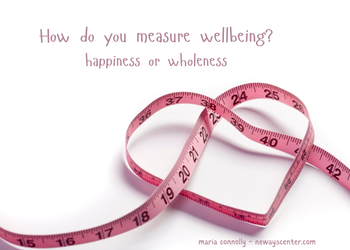
What if the real measure of well-being isn't how you feel on any given day, but how deeply connected you remain to yourself while your feelings come and go?
Feeling happy and feeling whole are not the same thing.
Happiness is a beautiful emotion. It deserves to be welcomed and enjoyed. But it doesn’t define whether our lives are going well.
On the other hand, wholeness isn't something you achieve. It's something you remember. It’s you remaining connected to yourself, even when life feels uncertain. You can experience joy without clinging to it, disappointment without being defined by it, and change without losing your center. Rather than being carried away by every emotional wave, you have an inner steadiness that allows you to meet life with greater clarity, courage, and self-trust.
 Because we're rewarded for staying composed, solving problems, and pushing through challenges, we become skilled at managing what's happening around us while slowly losing touch with what's happening within us.
We keep moving, achieving, caring for everyone else. Yet somewhere beneath the full calendar and the endless responsibilities, we lose ourselves. All the while, our body quietly waits for us to come back.
You know, those moments when you suddenly realize you've been holding your breath. Or your shoulders have been tense for hours. Or you've agreed to something your whole body quietly resisted.
Those tiny moments are invitations to come home again and be present. Presence is where self-trust begins. And self-trust is what allows us to move through uncertainty without losing ourselves.
When we lose connection with ourselves, we begin searching outside ourselves for reassurance. We overthink decisions. We question our instincts. We wait until we're more confident before taking the next step. We believe that once we feel better, we'll trust ourselves. This isn't a personal failing. It's what many of us learned to do to keep life moving.
But embodied living gently turns that equation around. Instead of waiting to feel better before trusting ourselves, we begin reconnecting with ourselves first. And from that place of connection, our emotions no longer determine whether we're okay. They simply become part of being fully human.
What Changes When Wholeness Becomes Your Compass
Feeling happy and calm every moment of every day isn’t the goal. Instead, we're learning to reconnect with our embodied center, the steady place within us that remains grounded even when our emotions ebb and flow.
As you reconnect with yourself, you discover that staying present with discomfort builds far more self-trust than escaping it. You begin honoring your nervous system's need for recovery instead of pushing relentlessly ahead, and you become more willing to receive a compliment, support, and moments of quiet beauty. Gradually, your values become a steadier guide than your changing moods, and each time you return to yourself, you strengthen your resilience.
That is a very different way of defining well-being.
And every time you return to yourself, you strengthen something far more enduring than happiness. You strengthen your capacity to meet life as it is.
“Dream Big, Start Small.” Here's the one thing you can do today.
When you’re busy, it’s easy to lose sight of your inner compass of what’s truly important to you.
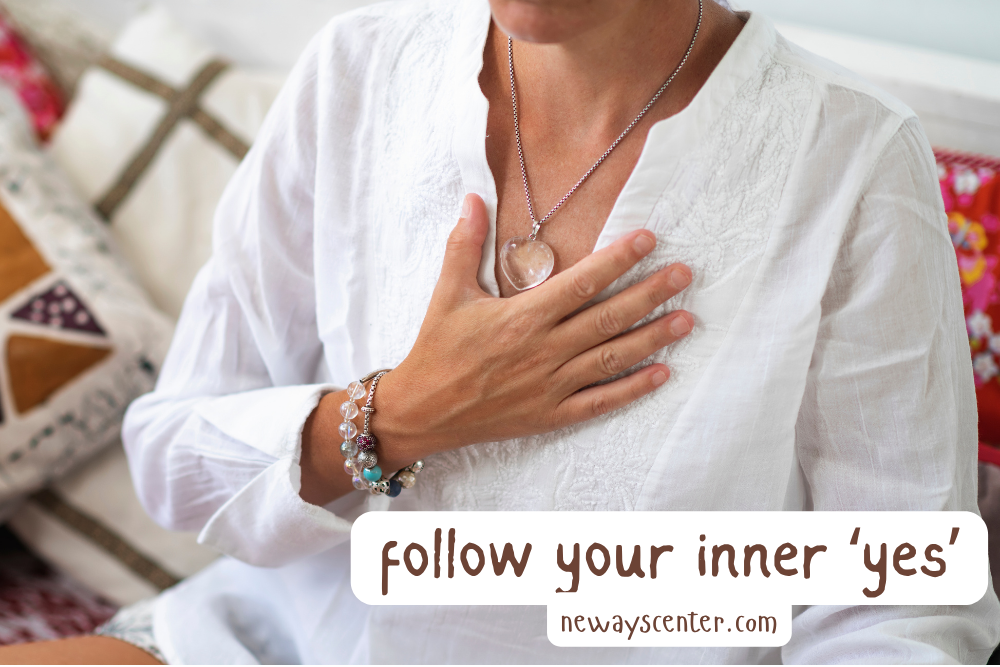
To make returning to yourself easier, here’s a somatic exercise called: Follow Your Inner "Yes". Our bodies often recognize what is deeply aligned long before our minds explain why. As you move through the coming week, notice one small decision you need to make. Perhaps it's whether to accept an invitation, speak up in a meeting, or permit yourself to rest.
Before deciding, pause for a moment. Place one hand over your heart or your abdomen and simply ask: "Which choice helps me stay connected to who I truly am?"
Rather than searching for the "right" answer, notice your body's response. Do you feel a sense of openness, ease, or quiet expansion? Or do you notice tightening, heaviness, or resistance?
Your body isn't trying to decide for you. It's simply offering information your thinking mind may have overlooked.
Each time you pause long enough to notice your breath, listen to your body, honor your values, or choose what feels deeply aligned, you're finding your way back to yourself. And this may be the truest measure of well-being: remembering who you are, and when you get lost, finding your way back to yourself.
That's what true wellbeing has been inviting us toward all along. A life where, no matter what we experience, we know how to find our way home again. Because happiness will visit. Wholeness stays. If you’d like a monthly dose of reminders like this, sign up for my newsletter. It’s free!
 Journaling Reflection Prompts
When life becomes stressful, how do I typically leave myself? What does that look like in my body?
What would change if I measured my well-being by how often I return to myself, rather than by how often I feel happy?