That “Go Along To Get Along” Part Of You Needn’t Be Erased
 Too often, we find ourselves in a situation where our “go along to get along” part takes over before we’re even aware of it. For example, Leigh noticed this happening halfway through a meeting.
A proposal had just been presented. Heads around the table nodded in agreement. The conversation moved quickly, and before she fully realized what was happening, she was nodding, too.
“Sounds good,” she heard herself say. The moment passed. The conversation moved on. But something in her body tightened. Because if she was honest, she wasn’t actually sure it did sound good. There was something about the plan that didn’t sit quite right with her. A detail that hadn’t been fully thought through. A question she hadn’t asked yet.
Later that afternoon, Leigh found herself replaying the moment. Why didn’t I say anything?
It wasn’t that she lacked confidence. Leigh had built a successful business and led teams for years. She was respected in her field. People sought out her perspective.
And yet, in certain moments, especially when the room moved quickly, or the stakes felt high, she felt the quiet pull to go along. Not dramatically. Just subtly. A quick nod. A softened comment. A moment of silence where she might have spoken.
If this sounds familiar, you’re not alone.
Many thoughtful, capable women recognize this pattern once it’s named: the instinct to accommodate, smooth things over, or keep the momentum moving rather than interrupting it with a different perspective.
In Part One of this conversation, we explored the idea of the shadow. This refers to the parts of ourselves that operate just outside our awareness. The accommodating part that reads the room quickly and adjusts before we’ve consciously decided to. And if you recognized that part of yourself, you may have had the same first thought many women do:
I need to get rid of this.
That's been the instinct most of us have been trained toward. But here's what I've learned after more than two decades of sitting with women in transformation:
The parts of us that go underground don't need to be destroyed. They need to be met.
The Problem With Getting Rid Of Your “Go Along to Get Along” Part
The personal growth world often talks about change in terms of elimination. Release your limiting beliefs. Break your patterns. Overcome what’s holding you back. Sometimes this language can be helpful. But when it comes to the shadow, to deeper patterns like the one Leigh experienced, elimination rarely works.
Not because you’re not trying hard enough. But because your shadow self developed for a reason. The accommodating instinct isn’t random. It’s intelligent. It formed in environments where reading the room, adjusting quickly, or softening your response helped you maintain connection, avoid unnecessary conflict, or simply survive.
Over time, your nervous system became deeply wired to do it automatically.
You can’t simply remove a survival strategy that has been quietly supporting you for years. What you can do is change your relationship to it. And this mindset shift from “elimination” to “understanding” opens the door to something very different.
Integrating With Your “Go Along to Get Along” Part
 When Leigh first began noticing her accommodating pattern, she assumed the next step would be to fight it. She imagined needing to become more forceful. More assertive. Less willing to adapt.
But when she slowed down enough to really observe what was happening internally, something surprising emerged. As she sat with her accommodating part — really sat with it, in her body, with curiosity rather than judgment — she began to understand it.
This part hadn't been sabotaging her. It had been protecting her. At different moments in her life, speaking too quickly or too directly had created friction. So her system had learned to check the environment first. To adjust slightly.
Seen through that lens, the accommodating part of her wasn’t weak. It was adaptive. And the moment she recognized that, something shifted.
Instead of pushing that part away, she acknowledged it. Of course, you learned to do that.
Once the accommodating part felt seen, understood, no longer forced underground, she changed. Not because she was conquered, but because she was finally included. She no longer had to operate in the dark, running its protective logic on automatic. She could come into relationship with the rest of herself.
She didn't disappear. She transformed.
Working With Your “Go Along to Get Along” Part: Presence Is Power
Here is what emerged from that transformation, and what I've watched emerge in women again and again. As this shift unfolded, Leigh didn’t suddenly become louder or more forceful. Instead, she became more present.
She began noticing the moment just before she automatically agreed with something. The subtle tightening in her chest. The quick impulse to keep the conversation moving smoothly.
And instead of reacting immediately, she paused. Sometimes she still chose to go along. But now it was a choice rather than an automatic reflex.
Other times she asked a question. Or said, “Give me a moment—I’m still thinking about that.” What emerged wasn’t a harder personality. It was steadiness. Being so fully grounded in the body, in the moment, in the truth of what she actually thinks and feels and knows, she changes the temperature of the room without raising her voice.
This is Presence, and it’s powerful! It’s genuinely a different kind of strength than the one most of us were taught to reach for.
Presence means being fully here in your body and awareness rather than automatically managing the room. When you’re present, you don’t have to dominate the conversation or force your perspective. Your clarity speaks for itself.
How To Engage The Power Of Presence
One thing I want to name, because it matters deeply to this work: This shift doesn't happen in the mind first.
You can understand the concept of shadow transformation intellectually and still be run by the accommodating part every time the nervous system perceives a threat. Insight is valuable, but it lives upstream of the body, and the body is where the pattern actually lives.
The real transformation happens when the nervous system learns that it's safe to be present. Safe to take up space. Safe to let the truth land without softening it first.
That's somatic work. It happens slowly, through repeated experience, through the felt sense of what it means to be fully here and have it be okay.
And when this happens?
The accommodating part doesn't vanish. She integrates. She becomes something new — a capacity for attunement, for reading the room with wisdom rather than fear, for choosing when to yield and when to hold ground rather than yielding automatically. She goes from shadow to skill.
Leigh said something toward the end of our work together that I've never forgotten. "I used to think my strength was my ability to push through anything. But that was just half of me. The real strength, the one I didn't know I had, is that when I'm fully present, I don't have to push at all. Things move differently."
Presence is power. Not power over. Not power through. Power that is your full self, inhabiting this moment, without apology and without armor.
This is what becomes available when you stop trying to eliminate the shadow and start transforming your relationship to it. Not just relief from an exhausting pattern. Not just better boundaries or cleaner communication. A different way of being powerful altogether.
“Dream Big, Start Small.” Here's the one thing you can do today.
The next time you notice yourself about to automatically agree or adjust, try this short practice.
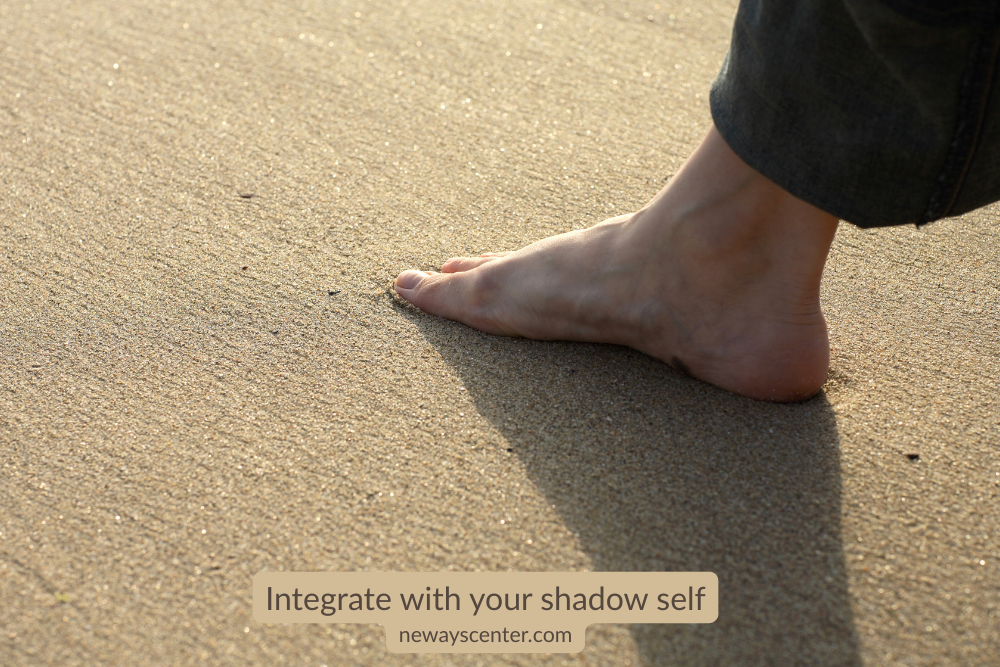
Pause before responding. Feel both feet on the floor and gently press them downward for a few seconds. Let your body register the support beneath you. Take a slow breath in through your nose. Let the exhale be slightly longer than the inhale. Relax your shoulders and allow your spine to lengthen.
Now quietly ask yourself: What do I actually think here?
You don’t have to say it immediately. Just noticing the answer interrupts the automatic pattern.
Presence often begins with a single breath.
Presence Is Power
 If this has stirred a recognition within yourself, that’s a beginning. You don't have to have it all figured out. You don't have to know yet what transformation looks like for you. You just have to be willing to look mindfully. And I can guide you through this process, if you’d like. Just let me know you’re ready.
Because the part of you that's been going along, accommodating, disappearing a little so the room stays comfortable — she has been waiting a long time to be seen. And when you finally see her, really see her, you may discover what so many women before you have discovered:
She was never the obstacle. She was always part of the power.
Journaling Reflection Prompts
Where in your life do you notice the instinct to go along before you’ve fully checked in with your own perspective?
What sensations appear in your body just before you automatically agree or accommodate?
What might shift if, in one small situation this week, you allowed yourself to pause and feel your response before speaking?