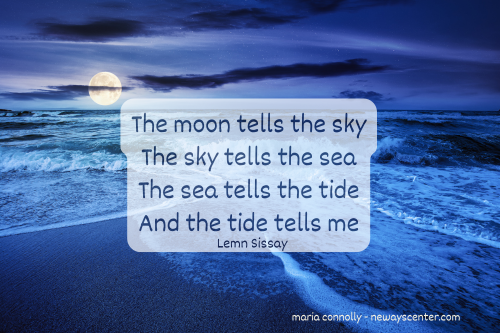
 Being inside all day, at the computer or on the phone with clients, it’s easy to miss what the cycles of nature invite us to do this time of year. The days grow shorter, and the world begins to make room for rest. Yet our own days seem to continue with the same patterns and pace, shaped by responsibilities, expectations, and the demands of others.
Take a moment to notice what the changing season gently asks of you: What life patterns might it be time to release? And what would it feel like to move through your days at a pace that is truly yours?
People who know me well, know that I love poetry. I see similarities in how poetry is written and how we live our lives. Especially at this time of year, as the light shortens and the year begins to close, I find myself listening for two things:
Rhyme: The way our earliest patterns show up in how we lead and love, changed but recognizable, sometimes transformed into our greatest gifts.
Rhythm: The pace we move through our days, whether it’s ours or one we borrowed long ago.
I invite you to listen for the patterns and pace in your story. Let’s use Mira as an example. (She’s a composite, drawn from patterns I’ve met many times in my work.)
Listen For The Rhyme — Life Patterns
Mira grew up in a house where her father's moods set the rhythm. She learned to read the room before she could name what she was reading: the sound of the car door, the weight of footsteps in the hall, whether dinner would be loud or silent.
At sixteen she found rowing, and the seat she wanted was the coxswain's. The coxswain doesn't pull an oar. She’s the voice in the boat that calls the stroke and sets the pace for everyone.
Thirty years later, newly promoted to lead a regional hospital, she sat across from me and said, "I just want to feel steady in the room." She was calling the strokes but the boat still felt rocky under her feet…is there a rhyme in that? That’s what I proceeded to help her see.
When Past Rhymes Echo Through The Present
When an early-life pattern reappears in adult life, I think of it as developmental poetry. The pattern changes somewhat but it’s still recognizable, the way a line returns in a poem as a rhyme. Here’s how that may look in real life:
- The child who lived inside someone else's tempo grows into the woman who sets the tempo. What once happened to her becomes what she does, and often what she does best.
- The child who mediated her parents' arguments becomes the negotiator everyone calls in.
- The kid nobody noticed becomes the leader who notices everyone.
- The eldest daughter who had to be the grown-up becomes the one the whole team leans on.
The pattern doesn't disappear. It gets reversed, refined, sometimes turned into a gift. Yet, that strength often comes with a dissonance (a disruption that creates unease, tension, or awkwardness).
Mira is a gifted coxswain. She reads a team in seconds. She knows when to push and when to ease off. People feel held by her rhythm.
But she’s still being pushed by a strategy she’d learned in childhood; it was learned for survival… being ever vigilant. She had spent her life managing the rhythm of the room so that nothing could catch her off guard, and she was exhausted.
 Setting the pace for everyone isn’t the same as feeling steady inside. Here’s the thing no one is talking about…competence without being grounded is the quiet cost of many leadership strengths. They work beautifully, yet they never let us rest.
Where The Rhyme Lives
Mira’s patterns live in her body. Before a difficult meeting, her breathing is shallow. Her eyes scan the faces around the table. Her shoulders lift a fraction, ready. Her nervous system is still listening for the car door to slam.
This is why insight alone rarely changes things. Mira understands the connection to her father perfectly yet still walks into the boardroom braced.
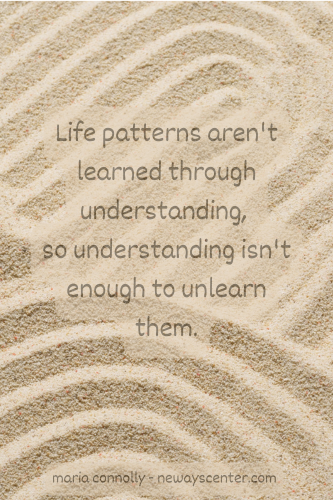
The pattern wasn't learned through understanding, so understanding isn't enough to unlearn it.
Moshe Feldenkrais taught that we can only do what we want once we know what we’re doing. The first step to choosing your own rhyme is to feel your pattern, noticing the bracing as it happens, with curiosity rather than judgment.
From repeating to choosing
Something shifts when you recognize your own rhyme. Once you see and feel it, you can choose to change it. Key to this process is letting your body feel someone holding a new rhythm for you that is reliable and safe. A steadying relationship with a coach, supervisor or therapist can do this for you.
Mira learned to find her own pace. She still calls the stroke. However, the bracing underneath it has softened. Her strength stays. The vigilance loosens its grip. And leadership becomes something she chooses, moment by moment, rather than something she can't stop doing.
“Dream Big, Start Small.” Here's the one thing you can do today.
Changing early-life patterns to life patterns you choose for yourself takes time and effort. Here’s a short practice to begin listening for the rhymes in your life:
Name a strength people count on you for as a leader. Be specific: not "I'm a good communicator" but "I can calm a room when it's about to tip."
Ask yourself: when did I first learn to do this? Who or what did it help me survive, manage or protect?
Hold that early memory for a moment and notice your body. Your breath, your jaw, your shoulders, your belly. Don't change anything. Just notice.
Then ask: if this strength no longer had to protect me, how might I do it differently?
Write whatever comes, without editing. You may be surprised by what rhymes.
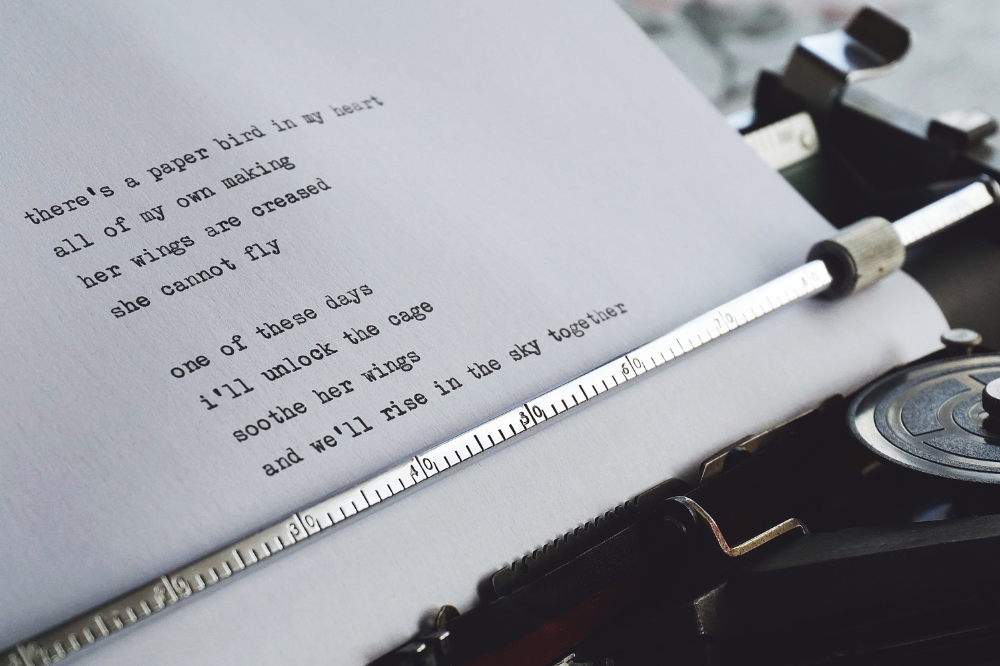
Our lives are poems still being written, and we get to keep writing them. Your body is already part of that conversation. You can begin by listening. In my EMERGE Method, we’ll explore how you’re rooted in origin, how you can rise in wholeness and lead yourself and others from inner authority. Contact me and let’s talk.


