 We use phrases like “life in the fast lane” and “ hustle and bustle” to describe the hectic pace of modern life. In today's business world, that sense of constant movement has become so familiar that we accept it as the way things are, even when we wish it didn’t have to be.
Messages to answer, decisions to make, people needing our attention, deadlines to meet, and responsibilities waiting at every turn. Technology keeps us connected, so the expectations of others reach us at any hour. Even our time away from work is crowded with errands, family commitments, social plans, and the pressure to make the most of every available moment.
How We Get Caught Up in Someone Else's Rhythm
Who decides how fast we need to move? Most of us don't make a conscious decision to live at someone else's pace. It happens gradually, through the small adjustments we make to meet expectations and keep things moving.
Over time, these responses become automatic. We learn to anticipate what others need before they ask, feel responsible for keeping things on track, and become accustomed to operating under pressure.
Trying to change these patterns often addresses only the surface of what’s going on. The pace we’re keeping today has roots in much earlier experiences: learning to meet a parent's expectations, adapting to the moods of others, or discovering that being dependable and staying one step ahead makes us feel accepted or secure.
By the time these patterns show up in professional and personal life, that pace or rhythm feels like our own, when it really isn’t. Understanding where your pattern of pace began is an important step toward choosing a different way forward.
Earlier, I shared Mira's story of growing up in a home where her father's moods determined the atmosphere, and everyone learned to adjust around him. It illustrates how the pace we live and lead by is shaped by experiences long before we’re aware of them. It feels so familiar that we mistake it for our natural rhythm.
A borrowed rhythm shows up in the body
- Breath that stays shallow and quick
- A slight forward lean, as if you’re moving toward the next thing
- The sense of being a step behind, even on a good day
- Meals eaten standing, transitions skipped, one meeting bleeding into the next
- A body that never quite lands, even when you finally sit down in the evening
These things tell you that somewhere along the way, your pace stopped being your own. In somatic coaching, we pay attention to these physical patterns because they reveal what has become embodied. You may understand intellectually that you don't need to respond to every request immediately, yet you feel compelled to do so. You may know that taking a break would help, but you rush forward anyway.
Mindful awareness creates an opportunity to pause and recognize the difference between what’s being asked of you and how you want to respond.
What does it feel like to go at your own pace?
Going at your own pace doesn't necessarily mean slowing everything down. Your natural rhythm might be energetic and quick. You may enjoy a full day of meaningful work, lively conversations, and creative activity. At other times, you may need more space between commitments, time to think, or a less demanding schedule.
The important distinction is whether you're choosing your pace or automatically adjusting it to meet someone else's expectations.
 Think about the difference between working quickly because you're engaged in something you enjoy and rushing because you're afraid of disappointing someone. The outward behavior looks similar, but your experience of it is very different. One comes from your own energy and intention; the other is driven by pressure and the need to keep up.
Leaders who are grounded in their own rhythm aren't locked into one speed. They can move quickly when a situation calls for decisive action and slow down when a conversation requires thought and attention. They recognize what the moment asks of them without allowing every demand to dictate how they move through the day. And when the urgency has passed, they can return to a pace that feels natural and sustainable to them.
The Pace You Set Becomes the Pace Others Feel
When you're in a leadership role, your pace affects others. If you arrive rushed, scattered, and braced for the next demand, they pick up on that tension before you say a word. Shoulders tighten. Breathing becomes shallow. Conversations speed up, and people focus more on keeping up than on thinking things through, sharing ideas, or raising concerns. Before long, the whole team is operating under a sense of urgency.
A leader who arrives grounded and present creates a different experience. When your breathing is settled, your attention is available, and you take time to listen before responding, people have more room to think. Conversations become more thoughtful, people feel comfortable speaking honestly, and the team has greater capacity to explore ideas and work through challenges together. Your presence establishes an environment where people contribute rather than spend their energy managing the pressure in the room.
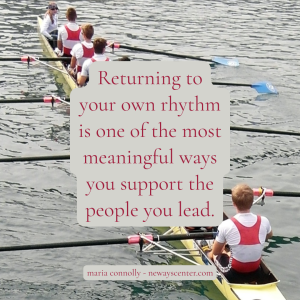
“Returning to your own rhythm is one of the most meaningful ways you support the people you lead.” ~ Maria Connolly
“Dream Big, Start Small.” Here's the one thing you can do today.

Whose pace or rhythm are you living by? One way to begin reclaiming your own rhythm is to practice a brief pause at the transition between activities. I call this the Threshold Pause. A threshold can be a doorway, the beginning of a meeting, the moment before you answer a message, or the transition from work to home.
Before moving into the next activity:
Feel your feet and the support beneath them.
Allow one exhale to finish. Notice whether you’ve been holding your breath or breathing quickly.
Ask yourself: “What pace do I want to bring into this next moment?”
Notice your answer. You might want focus, patience, energy, steadiness, or space.
Step into the next activity with that intention in mind.
Try this three times throughout your day. You may find that the pause itself becomes a useful reminder that you have a choice about how you respond, even when you can’t control everything happening around you.
Learning to go at your own pace means being present, recognizing the rhythm that belongs to you, and mindfully returning to your pace throughout the day. For a long time now, I’ve been paying attention to how patterns show up in our lives. Some fit us, and some don’t. If you’ve discovered some that don’t, download my free ebook, Introduction to The Stepping Forward Program, to find 6 tools that you already possess to help you dig deeper to identify the change you desire and need.
 Reflections in a Bottle
Who or what has the greatest influence on the pace of my days?
What does my body tell me when I’m moving faster than feels right?
When do I feel most connected to my own rhythm?
What is one small change I could make to bring more choice into the way I move through my day?


