


How to Calm Your Mind by Coming Back to Your Body

If you’re like many of the women I work with, you don’t struggle because you don’t know how to calm your mind. You struggle in the moment when your body takes over.
Your chest tightens. Your jaw clenches. Thoughts accelerate. A conversation shifts, a comment lands wrong, pressure builds, and suddenly you’re no longer responding. You’re reacting.
And in that moment, it doesn’t matter how self-aware, intelligent, or practiced you are.
Your nervous system has already made the call. This is the piece that often gets missed in conversations about “how to calm your mind.” Because the mind isn’t actually where the spiral begins.
And if you want to access calm in a way that’s reliable, especially under stress, your nervous system needs to be heard, acknowledged, and reassured. That’s where my somatic practice C.A.L.M. comes in. At the foundation of this practice is recognizing that you can’t think your way into calm.
Why You Can’t Think Your Way Into Calm
Your body is constantly moving between two primary states.
One is reactive. This is your fight-or-flight response (sympathetic nervous system), where your system is scanning for threat, preparing to defend, protect, or react quickly. It should only switch on occasionally, when you’re faced with real danger. After the threat passes, you quickly return to the rest and digest state in which you feel safe and peaceful.
The other is responsive. This is your rest-and-digest state (parasympathetic nervous system), where you feel grounded, steady, and able to think clearly. It’s the “shock absorber” in your brain that stops feelings like fear, frustration or anger from taking total control over your actions. Because you have an underlying sense of security and fulfillment, you can observe your feelings without judgment, name them and rationally cope with them, without getting too stressed out.
Both states are necessary. But many high-achieving women spend more time than they realize in a low-grade version of reactivity. Not because something is wrong, but because their system has learned to stay alert.
In those moments, trying to “calm down” through thinking alone often doesn’t work. Because the body is already activated.
What does work is creating a pause where the body can settle just enough for the mind to come back online.
How to Calm Your Mind: The C.A.L.M. Process
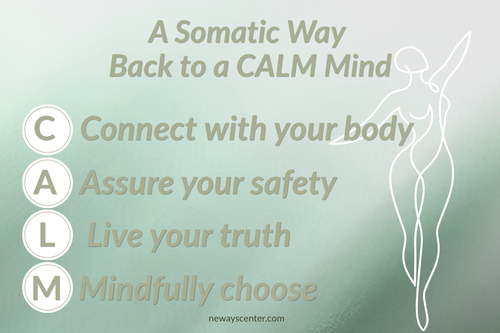 Think of this not as a mental exercise and more as a whole-body way of interrupting the stress response in real time.
C — Connect With Your Body
Before you try to fix or change anything, connect with what’s happening in your body. Notice the physical sensations. Where are you holding tension? What feels tight, hot, contracted, or unsettled? Then name what you’re feeling, without trying to change it.
“I feel tight in my chest. I feel ridiculed, belittled like when dad said I was just a stupid girl.”
“My shoulders are tense. I feel threatened.”
“I feel hurt. I feel defensive.”
This first step shifts you out of unconscious reaction and into mindful awareness. And that’s key to this process.
A — Assure Your Safety
Once you’ve made contact with your body, gently orient yourself to safety. This doesn’t mean convincing yourself everything is perfect. It means reminding your nervous system that you’re not in immediate danger. You might say to yourself:
“I’m safe right now.”
“This is uncomfortable, but I can handle it.”
Let your breath slow slightly. Feel your feet on the ground. This second step is how the body begins to downshift.
L — Live Your Truth
From a more regulated place, reconnect with what’s true for you. Not what you think you should say. Not what will keep the peace. What actually matters to you here? You might notice:
“This is important to me because…”
“I don’t feel okay with that.”
“I need to express this clearly.”
This third step brings you back into alignment, rather than reaction or people-pleasing. Byron Katie brilliantly observed:
“I have never experienced a stressful feeling that wasn’t caused by attaching to an untrue thought. Behind every uncomfortable feeling, there’s a thought that isn’t true for us.”
M — Mindfully Choose
Now, from this more grounded place, choose your response. Not the fastest response. Not the most defensive one. The one that reflects who you want to be. This might sound like:
“I’m going to pause before responding.”
“I’m going to speak clearly and calmly.”
“I’m choosing to stay present instead of escalating.”
In this way, calm becomes something you embody, not something you try to force.
“Dream Big, Start Small.” Here's the one thing you can do today.
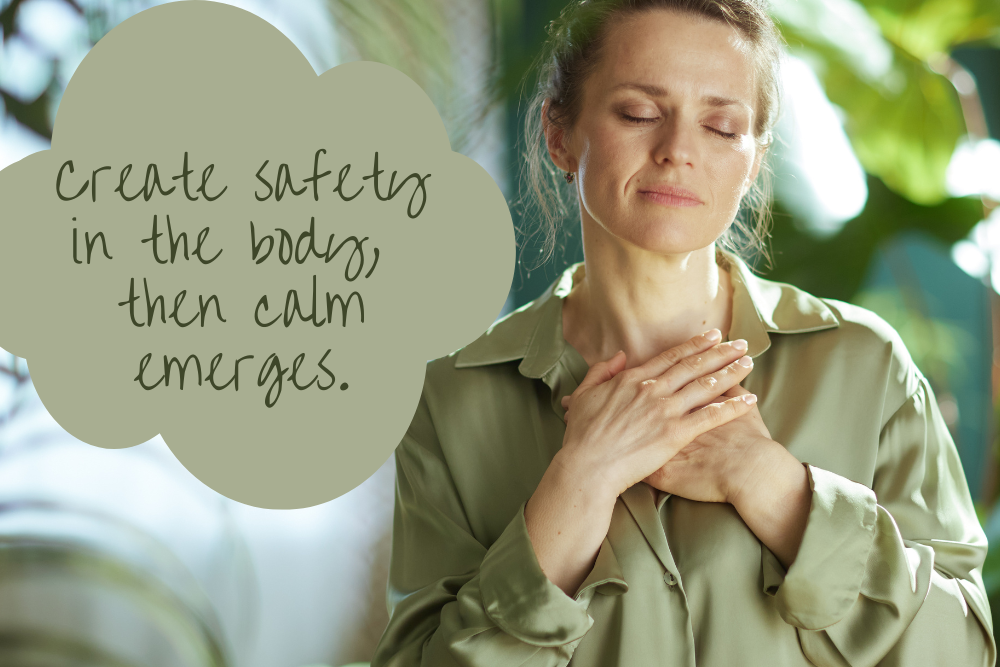
How to calm your mind in real time. The next time you feel yourself getting activated, pause, feel your feet pressing into the ground. Let your awareness drop out of your head and into your body.
Take a slow breath in through your nose, and a longer breath out through your mouth.
Now scan your body. Notice one place that feels tense or activated.
Instead of trying to relax it, simply bring your attention there. Stay with the sensation.
Then gently say to yourself, “I’m here.”
Let your exhale soften your body just a little. You don’t need to calm everything. Just allow a small amount of space.
From here, notice: Has your breath changed? Has the intensity shifted, even slightly?
This is how regulation begins. Not by forcing calm, but by creating enough safety in the body for calm to emerge. Would you like more training on how to calm your mind and live up to your full potential? Schedule a free 30-minute consultation to explore your options.
 Journaling Reflection Prompts
What sensations signal that you’ve moved into a reactive state?
What helps your body feel even slightly safer or more grounded in those moments?
What might change in your relationships or leadership if you responded from a regulated state more often?