


Feeling Lost? 3 Tips to Get You Headed in the Direction You Want to Go

There are times when the path ahead feels clear. You know what you’re working toward, why it matters, and what your next step needs to be. And then there are times when you’re feeling lost.
Nothing may be obviously wrong. Your career may be going well. Your relationships may look fine from the outside. You’re meeting your responsibilities and accomplishing the things you set out to do.
Yet something inside you whispers, This isn't working for me anymore.
It’s easy to dismiss this whisper, even though it’s accompanied by feelings of restlessness, disconnect, or emptiness. You may push it aside, thinking you just need a more detailed plan.
But doing usually isn’t the answer. Being is. Allow yourself a pause that lets you mindfully notice where your life and inner experience have moved out of alignment.
Course Correction Isn't Failure
 When you realize something isn't working anymore, the temptation is to see it as proof that you made the wrong choice. A course correction is triggered by new information:
You’ve changed. Or circumstances have changed. Even your values may have changed. What once felt nourishing no longer fits.
This is especially important for women who have built successful lives. The qualities that helped you create that success (determination, responsibility, perseverance, and the ability to tolerate discomfort) can make it difficult to recognize when you’ve moved from perseverance to self-abandonment.
Course correction asks for courage. The courage to listen to your inner wisdom and trust yourself.
“Live as if you were to die tomorrow. Learn as if you were to live forever.” ~ Mahatma Gandhi
When You’re Feeling Lost: 3 Practices for Finding Your Way Back
1. Take Back Your Authority
There’s a difference between being a responsible individual and believing you’re responsible for controlling everything. Because, realistically, you can’t control every circumstance, another person's choices, or what has already happened. But you can become more intentional about where you place your attention, what you participate in, what you tolerate, and what you choose next.
Inner authority begins with recognizing that your life isn’t something happening to you. You have choices, even when those choices are difficult. Sometimes the most powerful choice is setting a boundary, having a conversation, pausing to respond differently, or permitting yourself to want something new.
2. Notice What Has Become Automatic
Routines are useful because they reduce decision fatigue and create stability. By its very nature, a routine becomes a mindless reflex, which creates a disconnect.
Notice where you’re operating on autopilot and become more engaged by making small changes. Take a different route. Spend time somewhere new. Reconnect with someone who energizes you. Try an activity because you’re curious. Interrupt the autopilot long enough to remember you have choices.
3. Let Yourself Be Supported
High-achieving women are exceptionally capable. You figure things out and carry responsibility well. You probably feel more comfortable offering support than receiving it. But self-sufficiency is isolating.
Asking for help expands your capacity to move through life with more support, perspective, connection, and options. Consider where you might stop doing everything alone. Have the conversation you've been avoiding. Work with a coach or therapist. Tell someone you trust what is actually going on beneath the polished version of your life.
We were never meant to navigate life alone.
“Dream Big, Start Small.” Here's the one thing you can do today.
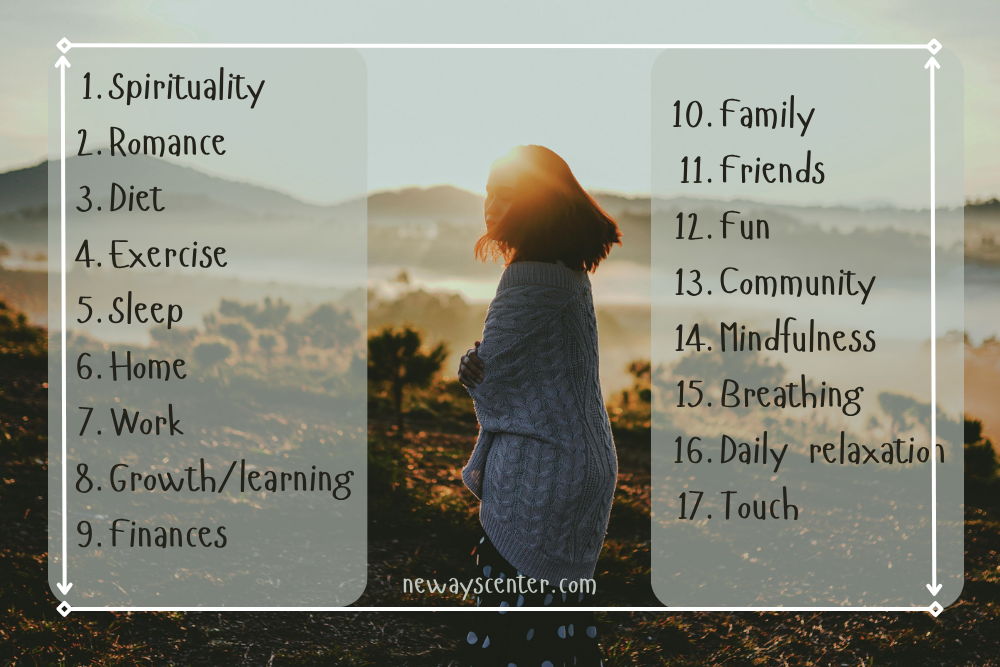
One of the most valuable questions you can ask isn’t, What do I think about my life? It’s how does my body experience my life?
Suspend judgment and notice how your body reacts to the seventeen areas of life in the image. Does your body soften? Do you feel spacious, energized, warm, or open? Or do you notice tension, heaviness, contraction, numbness, irritation, or feeling lost?
It takes courage to give attention to these feelings, but it’s the first step to feeling whole again. Your body's response isn't a verdict about whether an area of your life is "good" or "bad." It’s information. And information gives you somewhere to begin.
You may discover that the part of your life you thought was fine is asking for attention. Or that something you thought you needed to change is something you want to keep. Pay attention to where you feel alive. Get curious about the routines, relationships, responsibilities, and expectations that no longer fit. Then make one small, honest adjustment.
I know that stepping forward can feel unsettling. I invite you to download for free an Introduction to The Stepping Forward Program. It contains powerful somatic practices that help you listen to the whisper.